
Paver sealing for San Marco homes
Paver Sealing in San Marco, FL
In San Marco, old brick and newer concrete pavers take different sealers, so call (904) 946-8454 for a free estimate.
- Brings out deeper paver color
- Fresh joint sand helps lock pavers in place
- Gives weeds less room to grow
- Makes the surface easier to keep clean
- Free estimate, no obligation
Request a Free Estimate
Free, no obligation.
Fast, careful paver sealing in San Marco
Paver sealing in San Marco covers the streets around San Marco Square and the blocks along the river. A local contractor works on brick and concrete alike, on driveways, courtyards and walkways, and the estimate is free. Once you request your free estimate, an answer comes back inside 1 business day, usually much sooner.
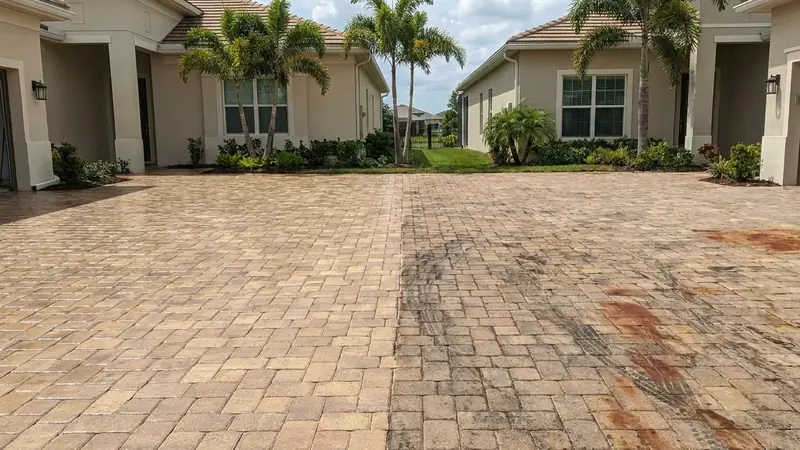
Picture a courtyard with green creeping across old brick, sand missing from the joints and tire marks near the street. After a wash, fresh sand and a sealer chosen for that surface, the area looks even again. If you want to talk it through first, call (904) 946-8454 and describe what you have. You get a price first, and nothing obliges you to book.
Why hire a local paver sealing contractor in San Marco?
San Marco mixes older homes, mature oaks and river-level streets, so a paver job here starts with a look at what is already down. A local contractor does that first, and to set it up, request your free estimate.
A free first look
The contractor checks your San Marco driveway, courtyard or walk and quotes a price. The visit is free.
A range to hold bids against
A typical published range in Northeast Florida is $1.75 to $3.25 per square foot to clean, sand and seal, which gives any San Marco bid a yardstick.
The right product for the surface
Old clay brick and concrete pavers do not always take the same sealer, and a yard with both may need two separate products.
Booking is your call
You pick the day and the finish, and you decide whether to go ahead. The estimate obliges you to nothing.
Get Your Free Estimate in San Marco
Tell us about your pavers in San Marco.
Free, no obligation
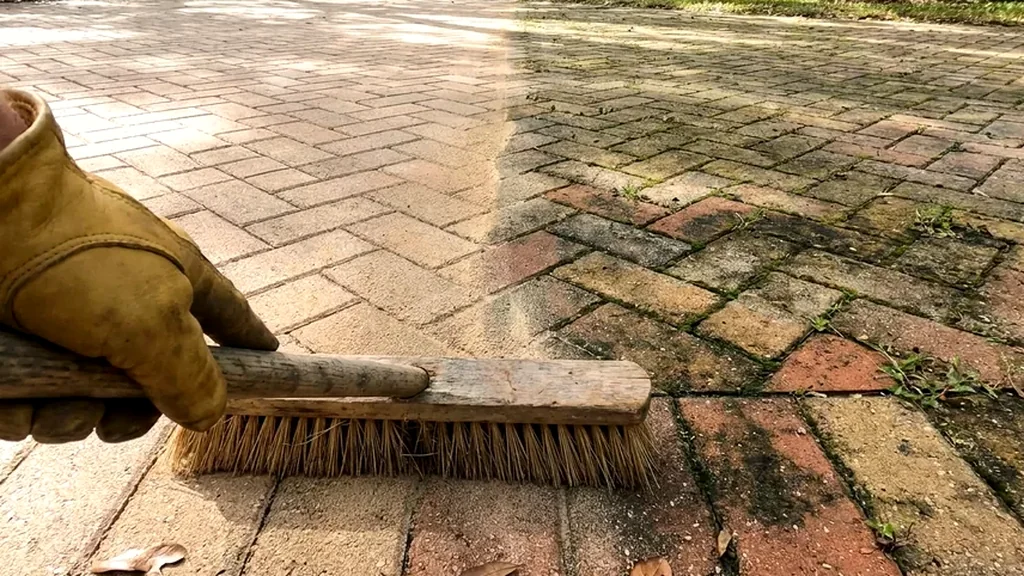
What paver problems show up most in San Marco?
Old brick beside newer concrete pavers
A Northeast Florida paver company says old clay brick is usually sealed with a silane or siloxane product that keeps water out and leaves the look alone. Concrete pavers can take a film-forming acrylic, and a yard with both needs two products. A Jacksonville guide adds that brick and natural stone are more porous and need different sealer chemistry. Tell the contractor what you have. A photo of each area helps. If a courtyard mixes materials, the contractor can price each part on its own line, which keeps the quote clear.
Damp surfaces and efflorescence locked under sealer
A brick manufacturer warns that sealant should never go over damp or dirty surfaces or efflorescence, because those conditions get locked in permanently. A Jacksonville paver company agrees that sealing damp pavers is the usual cause of white sealer. Shaded courtyards take longer to dry, so the contractor waits instead of sealing early. Shaded corners are the last to dry, so they get checked again before the first coat goes on.
Street water in low blocks
San Marco residents have dealt with flooding for generations. After Hurricane Irma in 2017, the high-water mark on a River Road home was about 5 feet. In October 2026 the city reported the LaSalle Street pump station complete. Pavers that sat in water pick up a film, and the St. Johns River is tidal here, so the wash comes before any sealer. Tell the contractor which part of your lot takes water, and mention any storm that left debris or silt on the surface.
Shade and stains under oaks and magnolias
San Marco's parks include Belmonte Park, ringed by oaks, and Landon Park, shaded by magnolias and oaks. Safe Touch says anything under a live-oak canopy gets brown tannin stains on drives and walks. Moss and algae need heavy shade and damp to take hold, so the shadiest corner of a courtyard is where the green starts. A wash lifts what sits on the surface, and sealer on pavers keeps the next season from locking the stain in, according to Safe Touch.
Turning tires and sunken aprons
A Jacksonville paver company says turning tires loosen joint sand, and that a sunken apron at the street or a dip should be fixed before sealing, since sealing preserves it. Another says sinking and washouts are the top reason pavers fail. Where a drive meets the street, expect the contractor to look hardest. Sand in the joints near the street is the first to go, so that edge gets refilled most carefully.
Do San Marco's historic streets need approval before pavers are sealed?
Only if your address sits in a historic district or is a designated landmark. The City of Jacksonville says those properties need a Certificate of Appropriateness for exterior work, and it lists driveways as an example. The city page does not mention sealing by name, so one question to staff can save trouble. Check your address on the Land Development Map, then request your free estimate.
San Marco was laid out as an 80-acre, Mediterranean-inspired community that shows the City Beautiful movement, with winding streets, planted medians, parks and larger lots. The Villa Alexandria subdivision was platted in 1929. The San Marco Preservation Society formed in 1975 to preserve the neighborhood. If you are not sure which rules apply to you, call (904) 946-8454.
Alexandria Place, a San Marco-area subdivision, has a median build year of 1939. A home that old may sit beside older brick or an older coat, so the contractor looks before choosing a product. Larger lots also mean larger courtyards and longer walks to measure. To have yours looked at, request your free estimate.
What does paver sealing cost in San Marco?
A typical published range for Northeast Florida is $1.75 to $3.25 per square foot to clean, sand and seal. Safe Touch says strip and reseal costs more when the old coat has failed. A Jacksonville company says quotes for the same driveway can vary widely, so ask each bidder what is included. For a figure tied to your surfaces, request your free estimate.
Smaller jobs cost more per square foot because setup time is spread over less surface. Tight side yards and gates add prep time, and a yard with both brick and concrete may need two products. Call (904) 946-8454 and the contractor can tell you which of these apply to your property.
| Paved area | Typical example | Clean, sand and seal |
|---|---|---|
| 300 sq ft | Small patio or walkway | $525 to $975 |
| 600 sq ft | Two car driveway | $1,050 to $1,950 |
| 1,000 sq ft | Large driveway or pool deck | $1,750 to $3,250 |
| 1,500 sq ft | Driveway plus pool deck | $2,625 to $4,875 |
Math based on the $1.75 to $3.25 per square foot that Northeast Florida paver companies published as of November 2026. Your contractor sets the actual price after seeing the surface. Repairs, leveling and stripping failed sealer are usually extra.
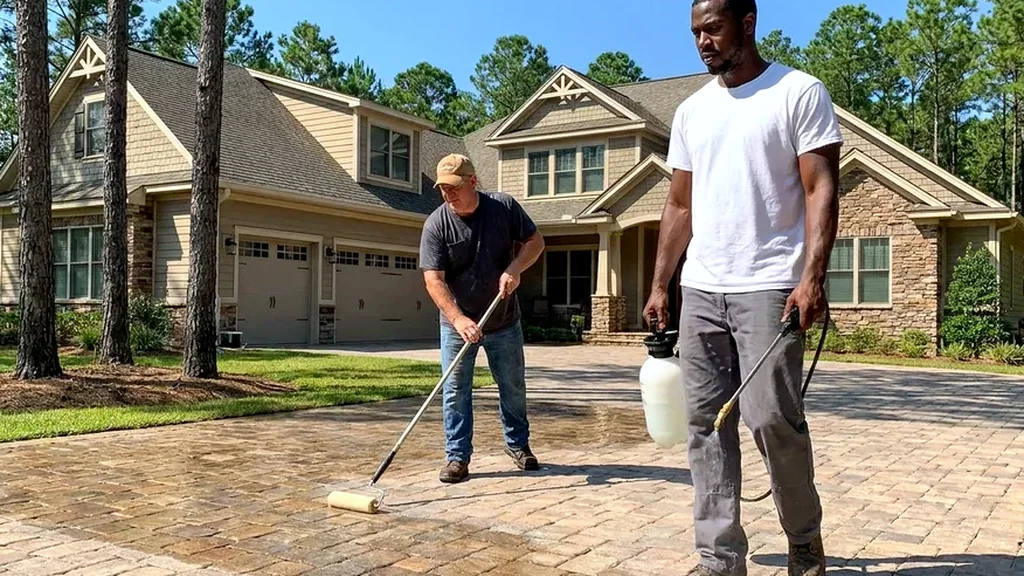
How does a paver sealing job work in San Marco?
Walk the property and read each surface
The contractor identifies what is underfoot: old clay brick, concrete pavers or both. A yard with both may need two products. Sunken or lifted spots, especially at the street apron, are reset first, since sealing preserves them. Any older coat is identified too, because water-based sealer cannot go over solvent-based sealer. Photos of any spot that holds water help with the plan, and so does the age of the house.
Wash with pressure matched to the surface
Cleaning comes next, with attention to green growth in shade, tannin under the oaks and oil or tire marks near the street. Pressure stays modest, since going above 3,000 PSI on standard concrete pavers risks stripping the surface. Failed or flaking sealer is stripped before the new coat. Rinse water is kept off plants and away from older mortar joints along the house wall. Oil and rust spots get treated ahead of the wash, but deep stains may not come out completely.
Sand the joints again
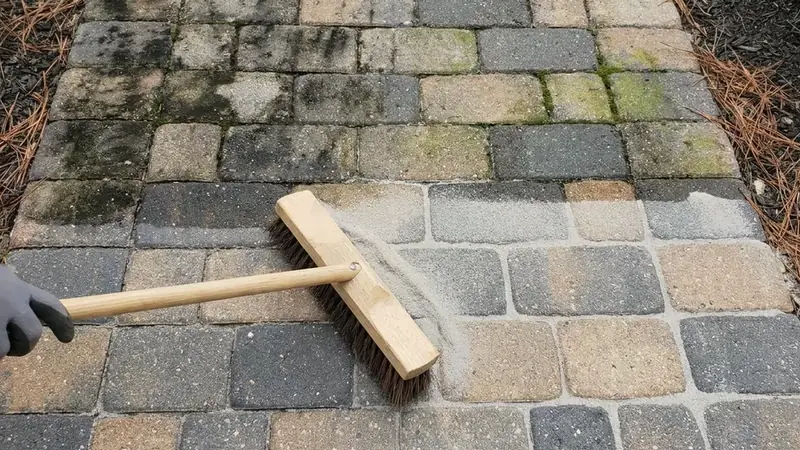
Washing takes joint sand with it, so fresh sand goes in ahead of the sealer. Turning tires loosen joint sand too, so drive areas often need the most. Brushing continues until every joint is full, and then the surface is swept. Brick courtyards get the same treatment. Sand is brushed in until the joints stop taking more.
Let the surface dry completely
Sealant should never go over damp or dirty surfaces, because those conditions get locked in. A shaded San Marco courtyard can stay damp long after a sunny drive dries, and tides and rain keep low blocks wet. The contractor holds the job until the surface is dry, even if that moves the date. On a sunny open drive, that wait can be short, but a shaded courtyard may need a second day.
Apply the product chosen for the surface
The sealer goes on, sprayed and then back-rolled into the joints. Walking is usually fine within a few hours, and one Jacksonville company says to keep cars off for about a day. A silane or siloxane product leaves old brick looking natural, while a film-forming acrylic on concrete stabilizes the joint sand. Ask which product suits each surface before the day is set.
Complete paver services in San Marco
Think of a San Marco job as four steps: wash, re-sand, seal, cure. The wash lifts stains and old film without stripping the surface. Fresh sand goes in once everything is dry, then the sealer. A local contractor explains that order up front, and when you request your free estimate you can ask how long yours would take.
Brick and concrete are sealed differently. A trade supplier sorts sealers into film-forming acrylics, which sit on the surface and stabilize joint sand, and silane or siloxane products, which soak in and leave the look unchanged. Ask which one is going on your surface and why. To talk it through, call (904) 946-8454.
Washing takes care, since a trade supplier warns that going above 3,000 PSI on standard concrete pavers risks stripping the surface. Sealer is typically sprayed and then back-rolled into the joints. A contractor who keeps pressure low and rolls the joints protects the surface you have. To hear how yours would be handled, request your free estimate.
Rain decides the calendar. Jacksonville's rainfall is concentrated from May to September, often in brief, intense downpours, and November through April is the driest stretch. Because sealer needs a dry surface, a careful contractor watches the forecast. If you are planning around a season, call (904) 946-8454 and ask what is open.
Questions to ask before you hire
- Can you lift the tire marks off my driveway before you seal it?
- If a paver is cracked, will you replace it before the sealer goes on?
- Does your schedule fit my HOA's rules on work hours and trailers on the street?
- Can you show me photos of a finished job that looks like mine?
- How do you keep the wash water out of the storm drain at the curb?
- Do you bring your own water, or hook up to my outside spigot?
- Will the same people who quote the job be the ones doing the work?
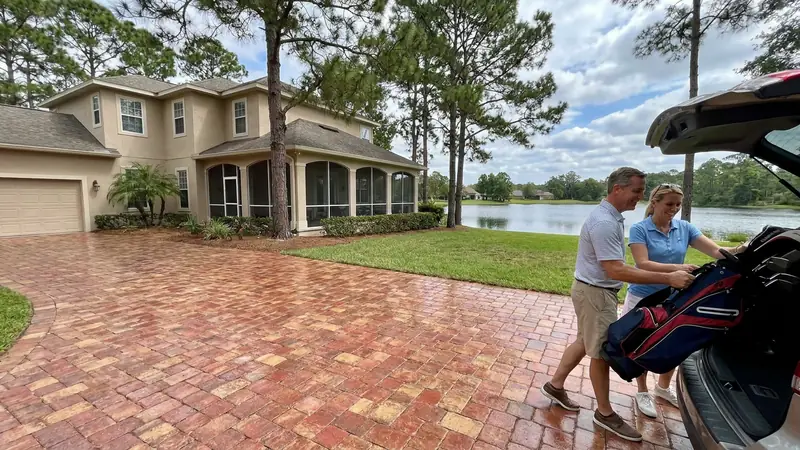
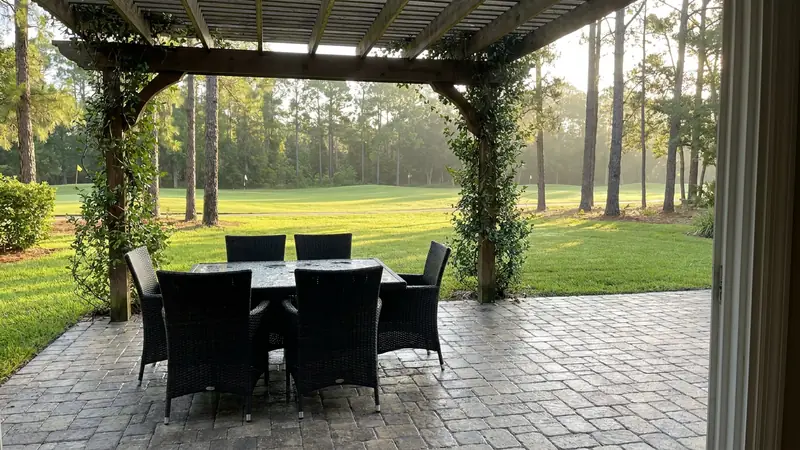
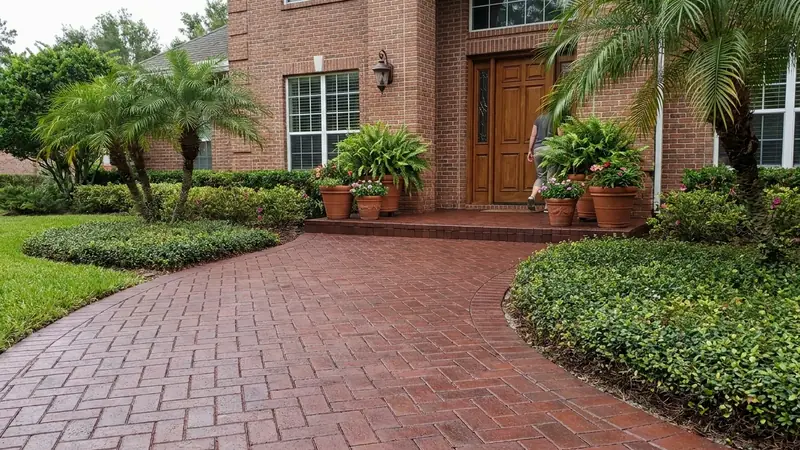
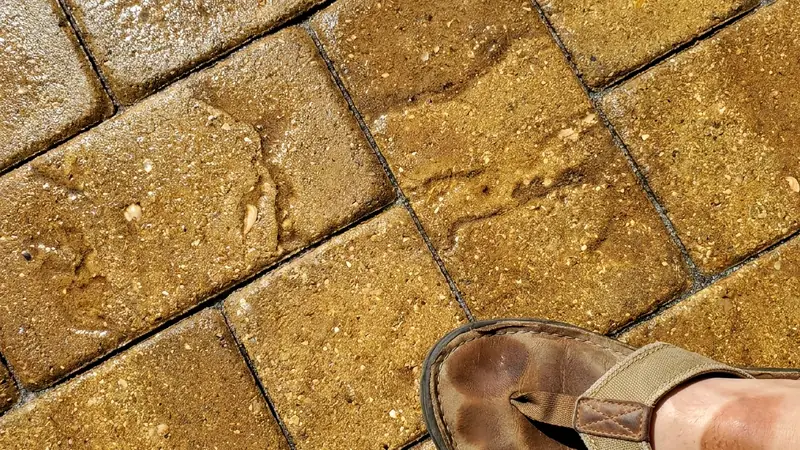
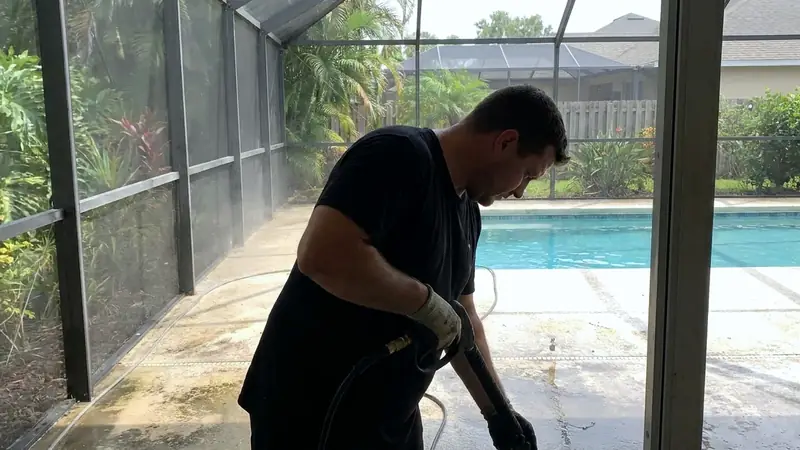
What do sealed pavers look like around San Marco?
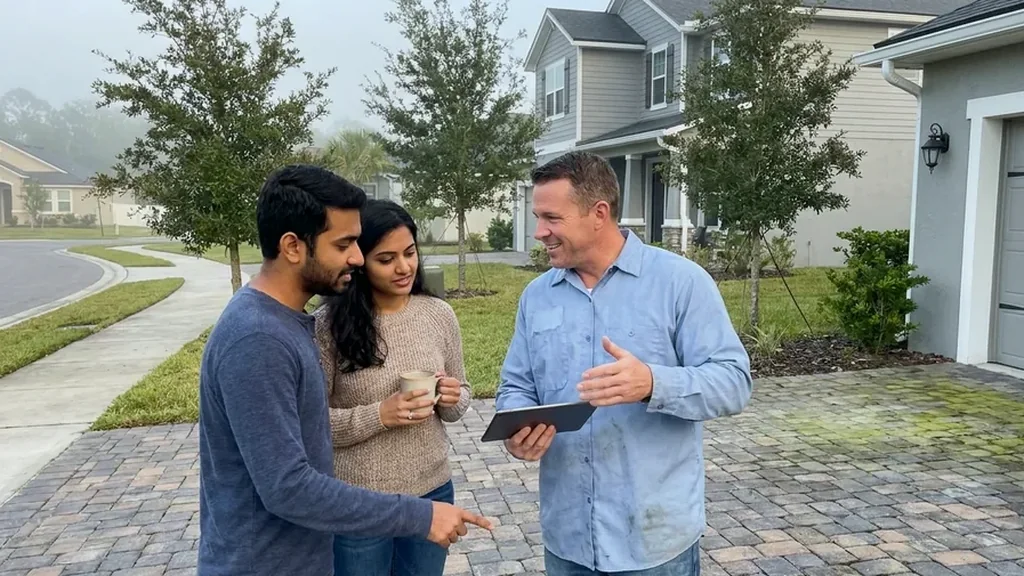
Why local matters in San Marco
Some San Marco blocks take water, and a local contractor knows which. The LaSalle Street pump station was built to send excess water back to the river, and residents there have dealt with flooding for generations. Ask about timing after storms when you call (904) 946-8454.
Local experience covers the river too. Near Jacksonville the St. Johns is an estuary open to the ocean, with a strong tidal influence. A San Marco resident reported that wakes from passing drivers push water into yards and homes, especially at high tide. To hear how a sealing day is planned around that, request your free estimate.
Older homes bring their own questions. San Marco's Villa Alexandria subdivision dates to 1929, so a contractor who knows the area expects older brick as well as newer concrete. That contractor asks about history before picking a product. If that sounds like your property, request your free estimate and mention when the house was built.
Why is San Marco called a Mediterranean-inspired community?
Because it was planned in an Italian Renaissance Revival style, though few homes kept to it and diverse styles appeared in the late 1920s. Carl and John Swisher built the first two homes in the Villa Alexandria subdivision, platted in 1929. The San Marco Theatre opened in 1938 in the art deco style. If your house is from that era, call (904) 946-8454.
Marco Lake began as a clay pit for the Gamble and Stockton Brick Company and stayed a water feature about a quarter mile long after the brickyard moved in 1925. San Marco has fourteen parks, from Belmonte Park with its oaks to Landon Park with its rose garden. Close to any of them, request your free estimate and mention your street.
Frequently Asked Questions
What makes paver sealing so costly in San Marco?
Prep is the bigger share of the cost, not the sealer. A Jacksonville company says smaller jobs cost more per square foot because setup time is spread over less surface. Published pricing across Northeast Florida is $1.75 to $3.25 per square foot, and stripping a failed coat costs more. A free estimate shows the number for your own surfaces.
What water-based paver sealer works for San Marco surfaces?
Surfaces differ, so ask the contractor to name the product and the reason for it. Old clay brick is usually sealed with a silane or siloxane product, while concrete pavers can take a film-forming acrylic. Water-based sealer also cannot be applied over solvent-based sealer. A bid that names the product makes quotes easier to compare.
How long does paver sealing last on a San Marco driveway?
Quotes commonly allow two to five years between coats. Turning tires, sun and shade all shift the number. Water that stops beading and soaks in fast is a sign a new coat is due, and the contractor can judge that on site. Ask the contractor to look at your shade and traffic before naming an interval. On a driveway that sees daily traffic, a wet look shows wear sooner than matte.
How much does it cost to re-sand and seal pavers in San Marco?
The published range for the region is $1.75 to $3.25 per square foot, and re-sanding is part of that work. A yard with both brick and concrete may need two products, which can change the quote. A free estimate gives you the figure. Ask for brick and concrete areas to be listed on separate lines. Extras such as a pool deck or walkway are measured in with the driveway, which raises the total.
Can old brick pavers in San Marco take the same sealer as concrete?
Not always. Brick and natural stone are more porous and need different sealer chemistry. A penetrating silane or siloxane product keeps water out and leaves the look alone, so it is the usual match for old clay brick. Tell the contractor if you also have concrete pavers in the same yard.
Do San Marco historic district rules cover sealing a driveway?
They may, if your address is in a historic district or a designated landmark. The city lists driveways among exterior work that needs a Certificate of Appropriateness, and it does not mention sealing by name. Check your address on the Land Development Map. Planning to add or change pavers is a different question from sealing, so ask staff about both. A call to the city before the job can settle it either way.
Can pavers be sealed after street flooding in San Marco?
Yes, as long as they have been washed and are completely dry. Sealant should never go over damp or dirty surfaces, because those conditions get locked in permanently. A contractor holds the job until the surface is dry. A wash first removes silt and film that a flood leaves behind. That wait can add a day, and a careful contractor will say so up front.
Does washing damage San Marco pavers?
Too much pressure can damage them. A trade supplier warns that going above 3,000 PSI on standard concrete pavers risks stripping the surface. A contractor matches pressure to the surface and keeps more joint sand in place. Ask the contractor what pressure is used on your surface. Gentle cleaning also leaves more of the joint sand in place, which means less to replace.
Nearby areas we serve
Ready for a Free Estimate in San Marco?
Call (904) 946-8454 and tell us about your pavers.
Free, no obligation